


Legal Steps to Get Married in Ireland (Complete Guide for Irish & International Couples)

Photos & Guide by Stefano Ferrier - Wedding Photographer in Ireland

Planning a wedding in Ireland is exciting but before the venue, the dress, or the photos, there’s one thing you need to get right: the legal process.
The good news? It’s actually quite straightforward once you understand the steps.
Whether you're Irish or planning a destination wedding, this guide will walk you through everything you need to do without confusion or stress.

Step 1: Legal steps to get married in Ireland
Register Your Intent to Marry
Planning to get married in Ireland?
Here are the legal steps you need to follow to get married in Ireland, starting with officially notifying the HSE (Health Service Executive) of your intention to marry.
You must give at least 3 months’ notice (this is a legal requirement in Ireland).
In reality, you should book your appointment 6–9 months in advance, especially during busy wedding seasons.
Once your paperwork is approved, you’ll be issued a Marriage Registration Form (MRF), this is your official marriage license.
Important:
Your MRF is valid for 6 months, so your wedding must take place within that timeframe.

Step 2: Attend Your HSE Appointment (The “Green Folder”)
Both partners must attend the appointment in person.
At this stage:
Your documents will be checked
Your details will be confirmed
You’ll receive your MRF (often called the “green folder”)
This document is essential.
If you’re having a celebrant or priest... they’ll need it before the ceremony
If you’re having a civil ceremony with an HSE registrar... they will keep it
Tip: Keep it safe. Without it, your marriage cannot be legally registered.

Step 3: Documents You Need
Before your appointment, the HSE will send you a checklist.
Typically, you’ll need:
Passport (or driver’s licence)
Birth certificate (long version)
Proof of address (e.g. bank statement dated within the last 3 months)
Depending on your situation, you might also need:
Divorce papers (if previously married)
Death certificate (if widowed)
An interpreter (if one of you doesn’t speak English)
If you're planning from abroad, this is covered in more detail here:

Step 4: Information You Must Provide
During your appointment, you’ll need to confirm key details about your wedding:
Your ceremony venue
The name of your solemniser (celebrant, priest, or registrar)
Details of your two witnesses (both must be over 18)
Don’t worry if everything isn’t 100% final yet, you can still make some changes later.

Step 5: What You Can (and Can’t) Change
After receiving your MRF, some details can still be updated:
You can change:
Venue
Solemniser
Witnesses
You cannot change:
The couple getting married
If anything changes, just contact the HSE before your wedding day to update your form.

What Happens on the Wedding Day?
On the day itself:
Your solemniser conducts the ceremony
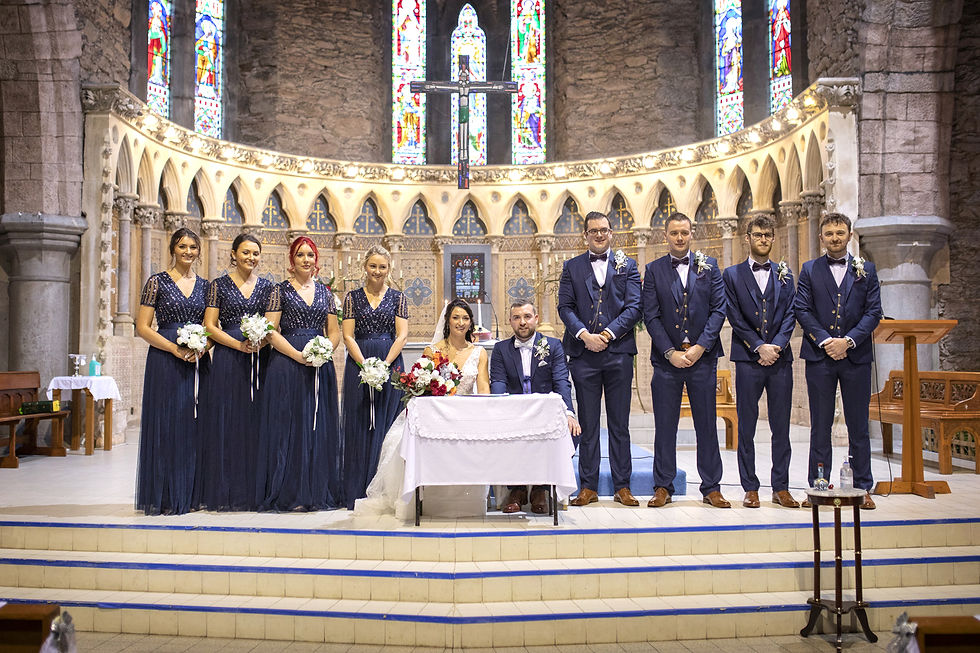
You, your partner, and your two witnesses sign the MRF
After the ceremony:
The signed MRF is returned to the HSE
Your marriage is officially registered
How This Fits Into Your Wedding Planning
The legal process is just one part of the bigger picture.
To make everything run smoothly, it helps to combine it with a clear plan:
to stay organised
for the full overview
so your timeline aligns with your legal steps
Everything connects and getting this part right early makes the rest much easier.

A Simple Tip Most Couples Overlook
Don’t leave the legal steps until the last minute.
Even though the minimum notice is 3 months, delays can happen, especially for:
popular wedding dates
destination weddings
missing documents
Start early, and everything else will feel more relaxed.
Final Thoughts
Getting legally married in Ireland is not complicated but it does require attention to detail and timing.
Once the paperwork is sorted, you’re free to focus on what really matters:
the atmosphere, the people, and the moments you’ll remember forever.
And if you're planning your wedding in Ireland and want natural, documentary-style photography that captures those moments as they truly happen, feel free to get in touch.

FAQs About the Legal Steps to Get Married in Ireland
How much notice do you need to get married in Ireland?
You must give at least 3 months’ notice to the HSE before getting married in Ireland. However, it’s recommended to start the process 6–9 months in advance to avoid delays, especially during peak wedding season.
What documents are required to get married in Ireland?
You’ll typically need:
Passport or valid ID
Long-form birth certificate
Proof of address (dated within 3 months)
Additional documents may be required if you were previously married or if you're travelling from abroad.
Can foreigners legally get married in Ireland?
Yes, non-residents can legally get married in Ireland.
The process is the same, but you may need extra documentation and should allow more time for planning.
For a full overview, see How to Plan Your Destination Wedding in Ireland from Overseas.
What is the Marriage Registration Form (MRF)?
The Marriage Registration Form (MRF) is the official document that allows you to get legally married in Ireland.
You receive it after your HSE appointment, and it must be signed on your wedding day.
How long is a marriage licence valid in Ireland?
The Marriage Registration Form (MRF) is valid for 6 months.
Your wedding must take place within this timeframe.
Can you change wedding details after submitting your application?
Yes, you can update details such as your venue, solemniser, or witnesses.
However, you cannot change the couple getting married.
Do you need witnesses to get married in Ireland?
Yes, you need two witnesses over the age of 18 present at your ceremony.
They must sign the Marriage Registration Form on the day.


